
1 min read
Wireline and Coiled Tubing Operations: How to reduce your operating costs with electrification and automation?
Updated 12 February 2026 The lifespan of a well varies dramatically depending on region — from as long as 50 years...
5 min read
Updated 12 February 2026
In today's world, where environmental concerns are taking center stage, the offshore drilling industry finds itself at a crossroads. The need to reduce emissions from drilling operations has never been more pressing, but we all know the saying of turning a super-tanker on a dime. It is an industry that is highly innovative, but also established itself in a different era, with vastly different consideration than today.
It is an industry with a complex supply-chain, involving many companies and individuals. This makes adoption of radically new approaches and considerations challenging in the short-term. However, it has all the expertise and resources to evolve, and with newer technological innovations, it also has the incentives necessary.
In this article, we will explore different methods to reduce emissions in offshore drilling operations, particularly the shift from conventional power sources to electrification & automation of equipment. Let's dive in!

Before we discuss electrification & automation, it's crucial to understand what creates emissions in drilling operations and what can be electrified. We're not talking about electrifying entire platforms, but focusing in on specific operations using temporary equipment that move from rig to rig, like well intervention.
Most offshore rigs rely heavily on diesel or gas generators for power. Temporary equipment, such as well intervention units or stimulation packages, often brings its own generator because tapping into the rig’s electrical system has historically been difficult or impossible.
These generators are:
Easy to mobilize and operate
Sized for peak loads rather than average demand
Run on fossil fuels, often at suboptimal efficiency
Studies show that power generation is one of the largest single sources of emissions from offshore assets. Electrifying rigs or connecting them to shore power can reduce CO₂ emissions dramatically; in some regions, full electrification of platform power demand can cut operational emissions by more than half.
A typical offshore installation may host anywhere from dozens to a few hundred people. Each person represents:
Transport emissions (helicopters and vessels)
Accommodation loads (heating, cooling, lighting)
Increased support vessel and logistics demand
Remote operations and reduced personnel on board (POB) have already shown that fewer people offshore can significantly lower both emissions and costs, while maintaining access to expertise onshore when needed.
When planning is conservative or poorly coordinated, personnel and equipment may arrive on location several days before operations start. Extended standby time means:
Generators running longer than necessary
More days of logistics and accommodation emissions
Extra fuel consumed without added value
Digital planning and integrated operations help align arrivals with actual operational need, reducing “dead time” and the emissions that come with it.
Historically, some commercial structures have unintentionally encouraged higher emissions:
Fuel for temporary equipment was often treated as “free” from the operator’s perspective, with little direct incentive for service providers to minimize consumption.
Day rates or fees linked to the number of people on board rewarded a larger physical presence offshore.
These models were created when emissions were not a strategic concern. Today, carbon pricing, ESG expectations and regulatory pressure are steadily changing that picture. Contractual frameworks are beginning to include emissions clauses, and operators increasingly evaluate vendors on both cost and carbon performance.
This shift opens the door for new technical solutions that both cut emissions and improve efficiency.
Read more: How to Test Digital Solutions for Drilling and Well Operations
Now, why should the offshore drilling industry change its approach and implement electrification & automation? The short answer from an economic standpoint is efficiency. Let’s elaborate:
Electrification in drilling can mean several things:
Using the rig’s central power system instead of individual diesel generators
Connecting the installation to shore power
Integrating renewable sources such as offshore wind with energy storage and hybrid power systems
These steps can reduce fuel consumption, stabilize power quality and lower emissions per unit of work performed. Hybrid and electrified power systems on offshore rigs have already demonstrated significant reductions in CO₂ and NOₓ, while also cutting fuel costs.
Electric drives and actuators are easier to control precisely than many traditional hydraulic systems. When paired with automation software, they can:
Maintain optimal operating points
Reduce unnecessary movements and standby losses
Deliver more consistent performance, independent of human fatigue
Industry reports highlight drilling automation and AI as key trends, driven by the need to improve safety, consistency and energy efficiency at the same time.
Electrification and automation help prepare offshore assets for:
Stricter environmental regulations
Future integration with low-carbon power sources
A market where emissions intensity is an important competitive parameter
Even as the world’s energy mix evolves, there will be large-scale offshore projects, whether oil and gas, carbon storage or renewables, where these capabilities remain essential.
Read more: Levels of Automation in Coiled Tubing & Wireline Operations
Successfully reducing emissions is not just about adding new equipment. It requires a coordinated approach across technology, operations and commercial frameworks.
Operators and service companies need to invest in equipment and systems designed for electrification from the outset:
Electric motors and drives as the default for new units
Hybrid power and energy storage systems for rigs and vessels
Control systems that integrate multiple loads and optimize overall demand
These technologies provide the technical foundation for safer, more energy-efficient operations.
Electrification and automation go hand in hand with:
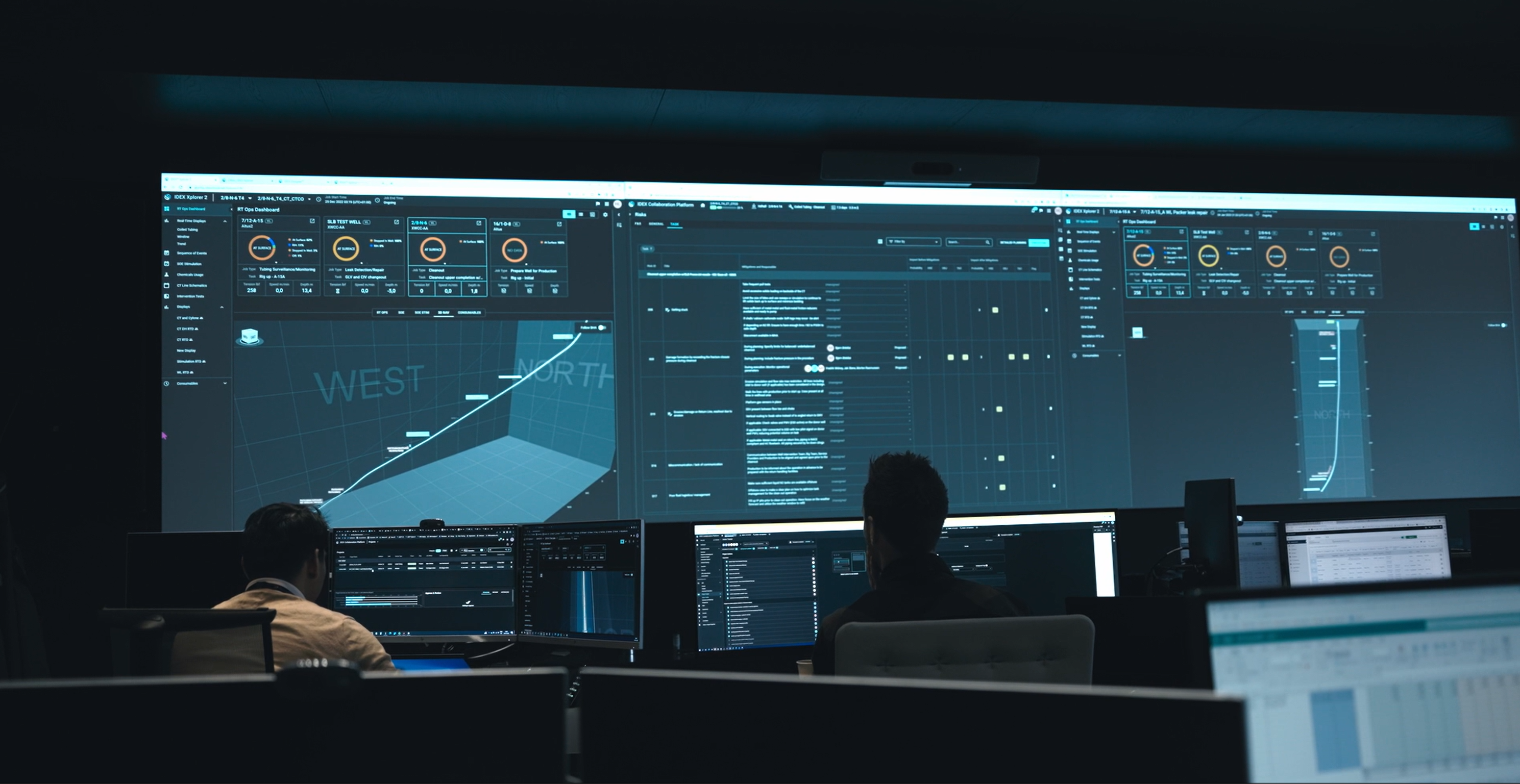
Remote monitoring and control from onshore centers
Better planning that aligns POB with true operational needs
Minimally attended or normally unattended facilities where appropriate
The result is fewer people exposed offshore, lower logistics demand and a reduced carbon footprint for the same, or better, level of operational oversight.
To sustain change, commercial arrangements must reward low-emission behavior:
Contracts that incentivize reduced fuel use and lower POB
Performance bonuses tied to emissions intensity, not just time and materials
Clear allocation of responsibility and benefit for electrification investments
As more technically viable solutions reach the market, it becomes easier to align contracts with both economic and environmental objectives.
Additional reading: Revolutionizing Oil and Gas: Digital Solutions, Efficiency, and IDEX Collaboration Platform
Digitalization plays a pivotal role in offshore drilling operations. When you want to electrify certain operations on an industrial scale, you must have digital technologies monitoring, controlling, and tying it all together. This becomes a positive spiral, where every operation provides valuable data for further optimization of the next.
Digitalization enables:
Continuous monitoring of power consumption and emissions
Real-time optimization of generator loading and equipment use
Automated reporting to internal and external stakeholders
Instead of relying on static assumptions, operators can base decisions on live data and feedback from every operation.
From Electro-Hydraulic to Fully Digital Workflows
When equipment becomes electrically driven and digitally controlled, several secondary benefits emerge:
Units that previously required frequent rig-up and rig-down can be permanently installed and controlled remotely.
Planning, supervision and post-job analysis become more granular and data-rich.
Collaborative software allows multiple subject matter experts to contribute to a shared operational picture.
Over time, a system that “learns” from every well and operation can propose more realistic expectations, identify best practices and reduce both risk and operating expenditure.
Reducing emissions in drilling operations is not a single-project initiative; it is a structural transformation of how energy, people and data are managed offshore.
By combining electrification, automation and digitalization, the industry can:
Replace inefficient diesel generation with cleaner, smarter power
Reduce personnel offshore without sacrificing oversight
Optimize equipment operation and planning through real-time data
Align commercial incentives with lower emissions and higher efficiency
These changes are not just a moral obligation or a response to external pressure. They are increasingly a source of competitive advantage, delivering lower operating costs, better asset performance and a more resilient position in a low-carbon future.
Electrification, supported by automation and digital solutions, gives offshore drilling a clear pathway to reduce emissions while strengthening operational excellence.
Sources: Sia Partners
1 min read
Updated 12 February 2026 The lifespan of a well varies dramatically depending on region — from as long as 50 years...
1 min read
Updated 12 February 2026 In today's rapidly evolving oil and gas industry, where efficiency and safety are...
1 min read
Updated 12 February 2026 In today’s upstream environment, success in drilling, completion, well intervention, and...